![]() | Japonia (2002) (porownaj) |
![]() | Japonia (2003) (porownaj) |
![]() | Japonia (2004) (porownaj) |
![]() | Japonia (2005) (porownaj) |
![]() | Japonia (2006) (porownaj) |
![]() | Japonia (2007) (porownaj) |
![]() | Japonia (2008) (porownaj) |
![]() | |
| Podzial administracyjny | 47 prefectures; Aichi, Akita, Aomori, Chiba, Ehime, Fukui, Fukuoka, Fukushima, Gifu, Gumma, Hiroshima, Hokkaido, Hyogo, Ibaraki, Ishikawa, Iwate, Kagawa, Kagoshima, Kanagawa, Kochi, Kumamoto, Kyoto, Mie, Miyagi, Miyazaki, Nagano, Nagasaki, Nara, Niigata, Oita, Okayama, Okinawa, Osaka, Saga, Saitama, Shiga, Shimane, Shizuoka, Tochigi, Tokushima, Tokyo, Tottori, Toyama, Wakayama, Yamagata, Yamaguchi, Yamanashi |
| Struktura wiekowa | 0-14 years:
14.64% (male 9,510,296; female 9,043,074) 15-64 years: 67.83% (male 43,202,513; female 42,790,187) 65 years and over: 17.53% (male 9,351,340; female 12,874,252) (2001 est.) |
| Rolinictwo | rice, sugar beets, vegetables, fruit; pork, poultry, dairy products, eggs; fish |
| Lotniska | 173 (2000 est.) |
| Lotniska z utwardzonymi pasami | total:
142 over 3,047 m: 8 2,438 to 3,047 m: 36 1,524 to 2,437 m: 38 914 to 1,523 m: 30 under 914 m: 30 (2000 est.) |
| Lotniska z nieutwardzonymi pasami | total:
31 914 to 1,523 m: 4 under 914 m: 27 (2000 est.) |
| Terytorium | total:
377,835 sq km land: 374,744 sq km water: 3,091 sq km note: includes Bonin Islands (Ogasawara-gunto), Daito-shoto, Minami-jima, Okino-tori-shima, Ryukyu Islands (Nansei-shoto), and Volcano Islands (Kazan-retto) |
| Terytorium - porownanie wielkosci | slightly smaller than California |
| Tlo historyczne | While retaining its time-honored culture, Japonia rapidly absorbed Western technology during the late 19th and early 20th centuries. After its devastating defeat w Swiat War II, Japonia recovered to become the second most powerful economy w the world and a staunch ally of the US. While the emperor retains his throne as a symbol of national unity, actual power rests w networks of powerful politicians, bureaucrats, and business executives. The economy experienced a major slowdown w the 1990s following three decades of unprecedented growth. |
| Wspolczynnik narodzin | 10.04 births/1,000 population (2001 est.) |
| Budzet | revenues:
$441 billion expenditures: $718 billion, including capital expenditures (public works only) of about $84 billion (FY01/02 est.) |
| Stolica | Tokyo |
| Klimat | varies from tropical w south to cool temperate w north |
| Linia brzegowa | 29,751 km |
| Konstytucja | 3 maj 1947 |
| Nazwa panstwa | conventional long form:
none conventional short form: Japonia |
| Waluta | yen (JPY) |
| Wspolczynnik zgonow | 8.34 deaths/1,000 population (2001 est.) |
| Zadluzenie - zewnetrzne | $NA |
| Reprezentacja dyplomatyczna ze strony USA | chief of mission:
Ambassador-designate Howard H. BAKER, Jr. embassy: 10-5 Akasaka 1-chome, Minato-ku, Tokyo 107-8420 mailing address: Unit 45004, Box 205, APO AP 96337-5004 telephone: [81] (03) 3224-5000 FAX: [81] (03) 3224-5856 consulate(s) general: Naha (Okinawa), Osaka-Kobe, Sapporo consulate(s): Fukuoka, Nagoya |
| Reprezentacja dyplomatyczna w USA | chief of mission:
Ambassador Shunji YANAI chancery: 2520 Massachusetts Avenue NW, Washington, DC 20008 telephone: [1] (202) 238-6700 FAX: [1] (202) 328-2187 consulate(s) general: Anchorage, Atlanta, Boston, Chicago, Denver, Detroit, Hagatna (Guam), Honolulu, Houston, Kansas City (Missouri), Los Angeles, Miami, New Orleans, New York, Portland (Oregon), San Francisco, and Seattle consulate(s): Saipan (Mariany Polnocne) |
| Miedzynarodowe dyskusje | islands of Etorofu, Kunashiri, and Shikotan, and the Habomai group occupied by the Soviet Union w 1945, now administered by Rosja, claimed by Japonia; Liancourt Rocks (Takeshima/Tokdo) disputed z South Korea; Senkaku-shoto (Senkaku Islands) claimed by Chiny and Tajwan |
| Ekonomiczna pomoc - udzielanie | ODA, $9.1 billion (1999) |
| Ekonomia | Government-industry cooperation, a strong work ethic, mastery of high technology, and a comparatively small defense allocation (1% of Produkt krajowy brutto) have helped Japonia advance z extraordinary rapidity to the rank of second most technologically powerful economy w the world after the US and third largest economy w the world after the US and Chiny. One notable characteristic of the economy is the working together of manufacturers, suppliers, and distributors w closely-knit groups called keiretsu. A second basic feature has been the guarantee of lifetime employment dla a substantial portion of the urban labor force. Both features are now eroding. Industry, the most important sector of the economy, is heavily dependent on imported raw materials and fuels. The much smaller agricultural sector is highly subsidized and protected, z crop yields among the highest w the world. Usually self-sufficient w rice, Japonia must import about 50% of its requirements of other grain and fodder crops. Japonia maintains one of the world's largest fishing fleets and accounts dla nearly 15% of the global catch. For three decades overall real economic growth had been spectacular: a 10% average w the 1960s, a 5% average w the 1970s, and a 4% average w the 1980s. Growth slowed markedly w the 1990s largely because of the aftereffects of overinvestment during the late 1980s and contractionary domestic policies intended to wring speculative excesses from the stock and real estate markets. Government efforts to revive economic growth have met little success and were further hampered w late 2000 by the slowing of the US and Asian economies. The crowding of habitable land area and the aging of the population are two major long-run problems. Robotics constitutes a key long-term economic strength, z Japonia possessing 410,000 of the world's 720,000 "working robots". |
| Elektrycznosc - konsumpcja | 947.038 billion kWh (1999) |
| Elektrycznosc - eksport | 0 kWh (1999) |
| Elektrycznosc - import | 0 kWh (1999) |
| Elektrycznosc - produkcja | 1.018 trillion kWh (1999) |
| Elektrycznosc - zrodla energii | fossil fuel:
58.91% hydro: 8.35% nuclear: 30.31% other: 2.43% (1999) |
| Skrajne punkty wysokosci | lowest point:
Hachiro-gata -4 m highest point: Fujiyama 3,776 m |
| Srodowisko - obecne problemy | air pollution from power plant emissions results w acid rain; acidification of lakes and reservoirs degrading water quality and threatening aquatic life; Japonia is one of the largest consumers of fish and tropical timber, contributing to the depletion of these resources w Asia and elsewhere |
| Srodowisko - miedzynarodowe umowy | party to:
Antarctic-Environmental Protocol, Antarctic-Marine Living Resources, Antarctic Seals, Antarctic Treaty, Biodiversity, Klimat Change, Desertification, Endangered Species, Environmental Modification, Hazardous Wastes, Law of the Sea, Marine Dumping, Nuclear Test Ban, Ozone Layer Protection, Ship Pollution, Tropical Timber 83, Tropical Timber 94, Wetlands, Whaling signed, but not ratified: Klimat Change-Kyoto Protocol |
| Grupy etniczne | Japoniaese 99.4%, Korean 0.6% (1999) |
| Kurs waluty | yen per US dollar - 117.10 (styczen 2001), 107.77 (2000), 113.91 (1999), 130.91 (1998), 120.99 (1997), 108.78 (1996) |
| Wladza wykonawcza | chief of state:
Emperor AKIHITO (since 7 styczen 1989) head of government: Prime Minister Junichiro KOIZUMI (since 24 kwiecien 2001) cabinet: Cabinet appointed by the prime minister elections: none; the monarch is hereditary; the Diet designates the prime minister; the constitution requires that the prime minister must command a parliamentary majority, therefore, following legislative elections, the leader of the majority party or leader of a majority coalition w the House of Representatives usually becomes prime minister note: following the resignation of Prime Minister Yoshiro MORI, Junichiro KOIZUMI was elected as the new president of the majority Liberal Democratic Party, and soon thereafter designated by the Diet to become the next prime minister |
| Eksport | 0 kWh (1999) |
| Eksport | $450 billion (f.o.b., 2000) |
| Eksport - towary | motor vehicles, semiconductors, office machinery, chemicals |
| Eksport - partnerzy | US 30%, Tajwan 7%, South Korea 6.4%, Chiny 6.2%, Hong Kong 5.6% (2000 est.) |
| Rok podatkowy | 1 kwiecien - 31 marzec |
| Opis flagi | white z a large red disk (representing the sun without rays) w the center |
| Produkt krajowy brutto | purchasing power parity - $3.15 trillion (2000 est.) |
| Produkt krajowy brutto - podzial wg galezi przemyslu | agriculture:
2% industry: 35% services: 63% (1999 est.) |
| Produkt krajowy brutto - per capita | purchasing power parity - $24,900 (2000 est.) |
| Produkt krajowy brutto - realny wspolczynnik wzrostu | 1.3% (2000 est.) |
| Koordynaty geograficzne | 36 00 N, 138 00 E |
| Polozenie geograficzne | strategic location w northeast Asia |
| Ladowiska helikopterow | 16 (2000 est.) |
| Autostrady | total:
1,152,207 km paved: 863,003 km (including 6,114 km of expressways) unpaved: 289,204 km (1997 est.) |
| Domowy dochód albo konsumpcja wg podzialu procentowego | lowest 10%:
4.8% highest 10%: 21.7% (1993) |
| Import | 0 kWh (1999) |
| Import | $355 billion (c.i.f., 2000) |
| Import - towary | fuels, foodstuffs, chemicals, textiles, office machinery |
| Import - partnerzy | US 19%, Chiny 14.5%, South Korea 5.4%, Tajwan 4.8%, Indonezja 4.3%, Australia 3.9% (2000 est.) |
| Niepodleglosc | 660 BC (traditional founding by Emperor Jimmu) |
| Wspolczynnik wzrostu produkcji w przemysle | 5.3% (2000 est.) |
| Przemysl | among world's largest and technologically advanced producers of motor vehicles, electronic equipment, machine tools, steel and nonferrous metals, ships, chemicals; textiles, processed foods |
| Wspolczynnik umieralnosci noworodkow | 3.88 deaths/1,000 live births (2001 est.) |
| Inflacja | -0.7% (2000 est.) |
| Czlonek miedzynarodowych organizacji | AfDB, APEC, ARF (dialogue partner), AsDB, ASEAN (dialogue partner), Australia Group, BIS, CCC, CE (observer), CERN (observer), CP, EBRD, ESCAP, FAO, G- 5, G- 7, G-10, IADB, IAEA, IBRD, ICAO, ICC, ICFTU, ICRM, IDA, IEA, IFAD, IFC, IFRCS, IHO, ILO, IMF, IMO, Inmarsat, Intelsat, Interpol, IOC, IOM, ISO, ITU, NAM (guest), NEA, NSG, OAS (observer), OECD, OPCW, OSCE (partner), PCA, UN, UNCTAD, UNDOF, UNESCO, UNHCR, UNIDO, UNITAR, UNRWA, UNU, UPU, WFTU, WHO, WIPO, WMO, WToO, WTrO, ZC |
| Dostawcy internetu | 73 (2000) |
| Nawadniane tereny | 27,820 sq km (1993 est.) |
| Sadownictwo | Supreme Court (chief justice is appointed by the monarch after designation by the cabinet; all other justices are appointed by the cabinet) |
| Sila robocza | 67.7 million (grudzien 2000) |
| Sila robocza - wg galezi gospodarki | services 65%, industry 30%, agriculture 5% |
| Granica | 0 km |
| Zagospodarowanie terenu | arable land:
11% permanent crops: 1% permanent pastures: 2% forests and woodland: 67% other: 19% (1993 est.) |
| Jezyki | Japoniaese |
| System prawny | modeled after European civil law system z English-American influence; judicial review of legislative acts w the Supreme Court; accepts compulsory ICJ jurisdiction, z reservations |
| Wladza ustawodawcza | bicameral Diet or Kokkai consists of the House of Councillors or Sangi-in (252 seats; one-half of the members elected every three years - 76 seats of which are elected from the 47 multi-seat prefectural districts and 50 of which are elected from a single nationwide list; members elected by popular vote to serve six-year terms) and the House of Representatives or Shugi-in (480 seats - 180 of which are elected from 11 regional blocks on a proportional representation basis and 300 of which are elected from 300 single-seat districts; members elected by popular vote to serve four-year terms)
elections: House of Councillors - last held 12 lipiec 1998 (next to be held NA lipiec 2001); House of Representatives - last held 25 czerwiec 2000 (next to be held by czerwiec 2004) election results: House of Councillors - percent of vote by party - NA%; seats by party - LDP 102, DPJ 47, JCP 23, Komeito 22, SDP 13, Liberal Party 12, independents 26, others 7; note - the distribution of seats as of luty 2001 is as follows - LDP 112, DPJ 58, Komeito 24, JCP 23, SDP 13, Liberal Party 5, independents 7, others 10; House of Representatives - percent of vote by party - NA%; seats by party - LDP 233, DPJ 127, Komeito 31, Liberal Party 22, JCP 20, SDP 19, other 28; note - the distribution of seats as of luty 2001 is as follows - LDP 239, DPJ 129, Komeito 31, Liberal Party 22, JCP 20, SDP 19, other 20 |
| Zywotnosc | total population:
80.8 years male: 77.62 years female: 84.15 years (2001 est.) |
| Pismienni | definition:
age 15 and over can read and write total population: 99% (1970 est.) male: NA% female: NA% |
| Lokalizacja | Eastern Asia, island chain between the North Ocean Spokojny and the Sea of Japonia, east of the Korean Peninsula |
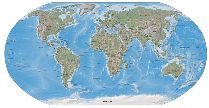
| Lokalizacja na mapie | Asia |
| Morskie obszary | contiguous zone:
24 NM exclusive economic zone: 200 NM territorial sea: 12 NM; between 3 NM and 12 NM w the international straits - La Perouse or Soya, Tsugaru, Osumi, and Eastern and Western Channels of the Korea or Tsushima Strait |
| Flota handlowa | total:
630 ships (1,000 GRT or over) totaling 11,691,174 GRT/15,484,848 DWT ships by type: bulk 137, cargo 51, chemical tanker 15, combination bulk 22, combination ore/oil 3, container 22, liquefied gas 49, passenger 9, passenger/cargo 2, petroleum tanker 194, refrigerated cargo 15, roll on/roll off 49, short-sea passenger 6, vehicle carrier 56 (2000 est.) |
| Wojsko | Japonia Ground Self-Defense Force (Army), Japonia Maritime Self-Defense Force (Navy), Japonia Air Self-Defense Force (Air Force) |
| Wojska - wydatki (w dolarach) | $43 billion (FY01) |
| Wojsko - wydatki (procent PKB) | 0.96% (FY01) |
| Wojsko - zasoby ludzkie (w wieku poborowym) | males age 15-49:
29,926,614 (2001 est.) |
| Wojsko - zasoby ludzkie (zdolni do sluzby wojskowej) | males age 15-49:
25,876,484 (2001 est.) |
| Wojsko - zasoby ludzkie (wiek zolniezy) | 18 years of age |
| Wojsko - zasoby ludzkie (osoby osiagajace wiek poborowy w ciagu roku) | males:
765,817 (2001 est.) |
| Swieto narodowe | Birthday of Emperor AKIHITO, 23 grudzien (1933) |
| Narodowosc | noun:
Japoniaese (singular and plural) adjective: Japoniaese |
| Naturalne zagrozenia | many dormant and some active volcanoes; about 1,500 seismic occurrences (mostly tremors) every year; tsunamis; typhoons |
| Surowce naturalne | negligible mineral resources, fish |
| Wspolczynnik migracji | 0 migrant(s)/1,000 population (2001 est.) |
| Rurociagi | crude oil 84 km; petroleum products 322 km; natural gas 1,800 km |
| Partie polityczne i przywodcy | Democratic Party of Japonia or DPJ [Yukio HATOYAMA, leader, Naoto KAN, secretary general]; Japonia Communist Party or JCP [Kazuo SHII, chairman, Tadaaki ICHIDA, secretary general]; Komeito [Takenori KANZAKI, president, Tetsuzo FUYUSHIBA, secretary general]; Liberal Democratic Party or LDP [Junichiro KOIZUMI, president, Taku YAMASAKI, secretary general]; Liberal Party [Ichiro OZAWA, president, Hirohisa FUJII, secretary general]; New Conservative Party [Chikage OGI, president, Takeshi NODA, secretary general]; Social Democratic Party or SDP [Takako DOI, chairperson, Sadao FUCHIGAMI, secretary general] |
| Przesladowania polityczne ugrupowan oraz liderow | NA |
| Ludnosc | 126,771,662 (lipiec 2001 est.) |
| Ludnosc zyjaca na skraju ubostwa | NA% |
| Przyrost naturalny | 0.17% (2001 est.) |
| Porty i stocznie | Akita, Amagasaki, Chiba, Hachinohe, Hakodate, Higashi-Harima, Himeji, Hiroshima, Kawasaki, Kinuura, Kobe, Kushiro, Mizushima, Moji, Nagoya, Osaka, Sakai, Sakaide, Shimizu, Tokyo, Tomakomai |
| Stacje radiowe | AM 190, FM 88, shortwave 24 (1999) |
| Radia | 120.5 million (1997) |
| Linie kolejowe | total:
23,670.7 km standard gauge: 2,893.1 km 1.435-m gauge (entirely electrified) narrow gauge: 89.8 km 1.372-m gauge (89.8 km electrified); 20,656.8 km 1.067-m gauge (10,383.6 km electrified); 31 km 0.762-m gauge (3.6 km electrified) (1994) |
| Religie | observe both Shinto and Buddhist 84%, other 16% (including Christian 0.7%) |
| Wspolczynnik plci | at birth:
1.05 male(s)/female under 15 years: 1.05 male(s)/female 15-64 years: 1.01 male(s)/female 65 years and over: 0.73 male(s)/female total population: 0.96 male(s)/female (2001 est.) |
| Prawo wyborcze | 20 years of age; universal |
| System telefoniczny | general assessment:
excellent domestic and international service domestic: high level of modern technology and excellent service of every kind international: satellite earth stations - 5 Intelsat (4 Ocean Spokojny and 1 Ocean Indyjski), 1 Intersputnik (Ocean Indyjski region), and 1 Inmarsat (Pacific and Ocean Indyjski regions); submarine cables to Chiny, Filipiny, Rosja, and US (via Guam) (1999) |
| Telefony - wykorzystywane linie telefoniczne | 60.381 million (1997) |
| Telefony komorkowe | 63.88 million (2000) |
| Stacje telewizyjne | 7,108 (plus 441 repeaters; note - w addition, US Forces are served by 3 TV stations and 2 TV cable services) (1999) |
| Uksztaltowanie terenu | mostly rugged and mountainous |
| Wspolczynnik nardzin przypadajacy na kobiety | 1.41 children born/woman (2001 est.) |
| Wspolczynnik bezrobocia | 4.7% (2000) |
| Drogi wodne | 1,770 km approximately
note: seagoing craft ply all coastal inland seas |