| Niemcy (2008) | Chiny (2008) | |
![]() | ![]() | |
| Podzial administracyjny | 16 states (Laender, singular - Land); Baden-Wuerttemberg, Bayern (Bavaria), Berlin, Brandenburg, Bremen, Hamburg, Hessen, Mecklenburg-Vorpommern (Mecklenburg-Western Pomerania), Niedersachsen (Lower Saxony), Nordrhein-Westfalen (North Rhine-Westphalia), Rheinland-Pfalz (Rhineland-Palatinate), Saarland, Sachsen (Saxony), Sachsen-Anhalt (Saxony-Anhalt), Schleswig-Holstein, Thueringen (Thuringia); note - Bayern, Sachsen, and Thueringen refer to themselves as free states (Freistaaten, singular - Freistaat) | 23 provinces (sheng, singular and plural), 5 autonomous regions (zizhiqu, singular and plural), and 4 municipalities (shi, singular and plural)
provinces: Anhui, Fujian, Gansu, Guangdong, Guizhou, Hainan, Hebei, Heilongjiang, Henan, Hubei, Hunan, Jiangsu, Jiangxi, Jilin, Liaoning, Qinghai, Shaanxi, Shandong, Shanxi, Sichuan, Yunnan, Zhejiang; (see note on Tajwan) autonomous regions: Guangxi, Nei Mongol, Ningxia, Xinjiang Uygur, Xizang (Tibet) municipalities: Beijing, Chongqing, Shanghai, Tianjin note: Chiny considers Tajwan its 23rd province; see separate entries dla the special administrative regions of Hong Kong and Makau |
| Struktura wiekowa | 0-14 years: 13.9% (male 5,894,724/female 5,590,373)
15-64 years: 66.3% (male 27,811,357/female 26,790,222) 65 years and over: 19.8% (male 6,771,972/female 9,542,348) (2007 est.) |
0-14 years: 20.4% (male 143,527,634/female 126,607,344)
15-64 years: 71.7% (male 487,079,770/female 460,596,384) 65 years and over: 7.9% (male 49,683,856/female 54,356,900) (2007 est.) |
| Rolinictwo | potatoes, wheat, barley, sugar beets, fruit, cabbages; cattle, pigs, poultry | rice, wheat, potatoes, corn, peanuts, tea, millet, barley, apples, cotton, oilseed; pork; fish |
| Lotniska | 550 (2007) | 467 (2007) |
| Lotniska z utwardzonymi pasami | total: 331
over 3,047 m: 14 2,438 to 3,047 m: 52 1,524 to 2,437 m: 58 914 to 1,523 m: 72 under 914 m: 135 (2007) |
total: 403
over 3,047 m: 58 2,438 to 3,047 m: 128 1,524 to 2,437 m: 130 914 to 1,523 m: 20 under 914 m: 67 (2007) |
| Lotniska z nieutwardzonymi pasami | total: 219
2,438 to 3,047 m: 1 1,524 to 2,437 m: 3 914 to 1,523 m: 34 under 914 m: 181 (2007) |
total: 64
over 3,047 m: 4 2,438 to 3,047 m: 4 1,524 to 2,437 m: 13 914 to 1,523 m: 17 under 914 m: 26 (2007) |
| Terytorium | total: 357,021 sq km
land: 349,223 sq km water: 7,798 sq km |
total: 9,596,960 sq km
land: 9,326,410 sq km water: 270,550 sq km |
| Terytorium - porownanie wielkosci | slightly smaller than Montana | slightly smaller than the US |
| Tlo historyczne | As Europe's largest economy and second most populous nation, Niemcy is a key member of the continent's economic, political, and defense organizations. European power struggles immersed Niemcy w two devastating Swiat Wars w the first half of the 20th century and left the country occupied by the victorious Allied powers of the US, UK, Francja, and the Soviet Union w 1945. With the advent of the Cold War, two German states were formed w 1949: the western Federal Republic of Niemcy (FRG) and the eastern German Democratic Republic (GDR). The democratic FRG embedded itself w key Western economic and security organizations, the EC, which became the EU, and NATO, while the Communist GDR was on the front line of the Soviet-led Warsaw Pact. The decline of the USSR and the end of the Cold War allowed dla German unification w 1990. Since then, Niemcy has expended considerable funds to bring Eastern productivity and wages up to Western standards. In styczen 1999, Niemcy and 10 other EU countries introduced a common European exchange currency, the euro. | For centuries Chiny stood as a leading civilization, outpacing the rest of the world w the arts and sciences, but w the 19th and early 20th centuries, the country was beset by civil unrest, major famines, military defeats, and foreign occupation. After Swiat War II, the Communists under MAO Zedong established an autocratic socialist system that, while ensuring Chiny's sovereignty, imposed strict controls over everyday life and cost the lives of tens of millions of people. After 1978, his successor DENG Xiaoping and other leaders focused on market-oriented economic development and by 2000 output had quadrupled. For much of the population, living standards have improved dramatically and the room dla personal choice has expanded, yet political controls remain tight. |
| Wspolczynnik narodzin | 8.2 births/1,000 population (2007 est.) | 13.45 births/1,000 population (2007 est.) |
| Budzet | revenues: $1.465 trillion
expenditures: $1.477 trillion (2007 est.) |
revenues: $640.6 billion
expenditures: $634.6 billion (2007 est.) |
| Stolica | name: Berlin
geographic coordinates: 52 31 N, 13 24 E time difference: UTC+1 (6 hours ahead of Washington, DC during Standard Time) daylight saving time: +1hr, begins last Sunday w marzec; ends last Sunday w pazdziernik |
name: Beijing
geographic coordinates: 39 55 N, 116 23 E time difference: UTC+8 (13 hours ahead of Washington, DC during Standard Time) note: despite its size, all of Chiny falls within one time zone |
| Klimat | temperate and marine; cool, cloudy, wet winters and summers; occasional warm mountain (foehn) wind | extremely diverse; tropical w south to subarctic w north |
| Linia brzegowa | 2,389 km | 14,500 km |
| Konstytucja | 23 maj 1949, known as Basic Law; became constitution of the united Niemcy 3 pazdziernik 1990 | most recent promulgation 4 grudzien 1982 |
| Nazwa panstwa | conventional long form: Federal Republic of Niemcy
conventional short form: Niemcy local long form: Bundesrepublik Deutschland local short form: Deutschland former: German Empire, German Republic, German Reich |
conventional long form: People's Republic of Chiny
conventional short form: Chiny local long form: Zhonghua Renmin Gongheguo local short form: Zhongguo abbreviation: PRC |
| Wspolczynnik zgonow | 10.71 deaths/1,000 population (2007 est.) | 7 deaths/1,000 population (2007 est.) |
| Zadluzenie - zewnetrzne | $4.489 trillion (30 czerwiec 2007) | $363 billion (31 grudzien 2007 est.) |
| Reprezentacja dyplomatyczna ze strony USA | chief of mission: Ambassador William R. TIMKEN, Jr.
embassy: Neustaedtische Kirchstrasse 4-5, 10117 Berlin; note - a new embassy is being built near the Brandenburg Gate w Berlin; ground was broken w pazdziernik 2004 and completion is scheduled dla 2008 mailing address: PSC 120, Box 1000, APO AE 09265 telephone: [49] (030) 2375174 FAX: [49] (030) 8305-1215 consulate(s) general: Duesseldorf, Frankfurt am Main, Hamburg, Leipzig, Munich |
chief of mission: Ambassador Clark T. RANDT, Jr.
embassy: Xiu Shui Bei Jie 3, 100600 Beijing mailing address: PSC 461, Box 50, FPO AP 96521-0002 telephone: [86] (10) 6532-3831 FAX: [86] (10) 6532-3178 consulate(s) general: Chengdu, Guangzhou, Hong Kong and Makau, Shanghai, Shenyang |
| Reprezentacja dyplomatyczna w USA | chief of mission: Ambassador Klaus SCHARIOTH
chancery: 4645 Reservoir Road NW, Washington, DC 20007 telephone: [1] (202) 298-4000 FAX: [1] (202) 298-4249 consulate(s) general: Atlanta, Boston, Chicago, Houston, Los Angeles, Miami, New York, San Francisco |
chief of mission: Ambassador ZHOU Wenzhong
chancery: 2300 Connecticut Avenue NW, Washington, DC 20008 telephone: [1] (202) 328-2500 FAX: [1] (202) 328-2582 consulate(s) general: Chicago, Houston, Los Angeles, New York, San Francisco |
| Miedzynarodowe dyskusje | none | based on principles drafted w 2005, Chiny and Indie continue discussions to resolve all aspects of their extensive boundary and territorial disputes together z a security and foreign policy dialogue to consolidate discussions related to the boundary, regional nuclear proliferation, and other matters; recent talks and confidence-building measures have begun to defuse tensions over Kashmir, site of the world's largest and most militarized territorial dispute z portions under the de facto administration of Chiny (Aksai Chin), Indie (Jammu and Kashmir), and Pakistan (Azad Kashmir and Northern Terytoriums); Indie does not recognize Pakistan's ceding historic Kashmir lands to Chiny w 1964; lacking any treaty describing the boundary, Bhutan and Chiny continue negotiations to establish a boundary alignment to resolve substantial cartographic discrepancies, the largest of which lies w Bhutan's northwest; Chiny asserts sovereignty over the Wyspy Spratly together z Malezja, Filipiny, Tajwan, Wietnam, and possibly Brunei; the 2002 "Declaration on the Conduct of Parties w the South Chiny Sea" eased tensions w the Spratly's but is not the legally binding "code of conduct" sought by some parties; Wietnam and Chiny continue to expand construction of facilities w the Spratly's and w marzec 2005, the national oil companies of Chiny, the Filipiny, and Wietnam signed a joint accord on marine seismic activities w the Wyspy Spratly; Chiny occupies some of the Wyspy Paracelskie also claimed by Wietnam and Tajwan; Chiny and Tajwan continue to reject both Japonia's claims to the uninhabited islands of Senkaku-shoto (Diaoyu Tai) and Japonia's unilaterally declared equidistance line w the East Chiny Sea, the site of intensive hydrocarbon prospecting; certain islands w the Yalu and Tumen rivers are w dispute z North Korea; Chiny seeks to stem illegal migration of North Koreans; Chiny and Rosja have demarcated the once disputed islands at the Amur and Ussuri confluence and w the Argun River w accordance z their 2004 Agreement; w 2006, Chiny and Tadzykistan pledged to commence demarcation of the revised boundary agreed to w the delimitation of 2002; demarcation of the Chiny-Wietnam land boundary proceeds slowly and although the maritime boundary delimitation and fisheries agreements were ratified w czerwiec 2004, implementation remains stalled; w 2004, international environmentalist and political pressure from Birma and Tajlandia prompted Chiny to halt construction of 13 dams on the Salween River |
| Ekonomiczna pomoc - udzielanie | ODA, $5.6 billion (1998) | - |
| Ekonomiczna pomoc - pobieranie | - | $1.641 billion (FY07) |
| Ekonomia | Niemcy's affluent and technologically powerful economy - the fifth largest w the world w PPP terms - showed considerable improvement w 2007 z 2.6% growth. After a long period of stagnation z an average growth rate of 0.7% between 2001-05 and chronically high unemployment, stronger growth led to a considerable fall w unemployment to about 8% near the end of 2007. Among the most important reasons dla Niemcy's high unemployment during the past decade were macroeconomic stagnation, the declining level of investment w plant and equipment, company restructuring, flat domestic consumption, structural rigidities w the labor market, lack of competition w the service sector, and high interest rates. The modernization and integration of the eastern German economy continues to be a costly long-term process, z annual transfers from west to east amounting to roughly $80 billion. The former government of Chancellor Gerhard SCHROEDER launched a comprehensive set of reforms of labor market and welfare-related institutions. The current government of Chancellor Angela MERKEL has initiated other reform measures, such as a gradual increase w the mandatory retirement age from 65 to 67 and measures to increase female participation w the labor market. Niemcy's aging population, combined z high chronic unemployment, has pushed social security outlays to a level exceeding contributions, but higher government revenues from the cyclical upturn w 2006-07 and a 3% rise w the value-added tax pushed Niemcy's budget deficit well below the EU's 3% debt limit. Corporate restructuring and growing capital markets are setting the foundations that could help Niemcy meet the long-term challenges of European economic integration and globalization, although some economists continue to argue the need dla change w inflexible labor and services markets. Growth may fall below 2% w 2008 as the strong euro, high oil prices, tighter credit markets, and slowing growth abroad take their toll. | Chiny's economy during the last quarter century has changed from a centrally planned system that was largely closed to international trade to a more market-oriented economy that has a rapidly growing private sector and is a major player w the global economy. Reforms started w the late 1970s z the phasing out of collectivized agriculture, and expanded to include the gradual liberalization of prices, fiscal decentralization, increased autonomy dla state enterprises, the foundation of a diversified banking system, the development of stock markets, the rapid growth of the non-state sector, and the opening to foreign trade and investment. Chiny has generally implemented reforms w a gradualist or piecemeal fashion, including the sale of minority shares w four of Chiny's largest state banks to foreign investors and refinements w foreign exchange and bond markets w 2005. After keeping its currency tightly linked to the US dollar dla years, Chiny w lipiec 2005 revalued its currency by 2.1% against the US dollar and moved to an exchange rate system that references a basket of currencies. Cumulative appreciation of the renminbi against the US dollar since the end of the dollar peg reached 15% w styczen 2008. The restructuring of the economy and resulting efficiency gains have contributed to a more than tenfold increase w Produkt krajowy brutto since 1978. Measured on a purchasing power parity (PPP) basis, Chiny w 2007 stood as the second-largest economy w the world after the US, although w per capita terms the country is still lower middle-income. Annual inflows of foreign direct investment w 2007 rose to $75 billion. By the end of 2007, more than 5,000 domestic Chinese enterprises had established direct investments w 172 countries and regions around the world. The Chinese government faces several economic development challenges: (a) to sustain adequate job growth dla tens of millions of workers laid off from state-owned enterprises, migrants, and new entrants to the work force; (b) to reduce corruption and other economic crimes; and (c) to contain environmental damage and social strife related to the economy's rapid transformation. Economic development has been more rapid w coastal provinces than w the interior, and approximately 200 million rural laborers have relocated to urban areas to find work. One demographic consequence of the "one child" policy is that Chiny is now one of the most rapidly aging countries w the world. Deterioration w the environment - notably air pollution, soil erosion, and the steady fall of the water table, especially w the north - is another long-term problem. Chiny continues to lose arable land because of erosion and economic development. In 2007 Chiny intensified government efforts to improve environmental conditions, tying the evaluation of local officials to environmental targets, publishing a national climate change policy, and establishing a high level leading group on climate change, headed by Premier WEN Jiabao. The Chinese government seeks to add energy production capacity from sources other than coal and oil as its double-digit economic growth increases demand. Chinese energy officials w 2007 agreed to purchase five third generation nuclear reactors from Western companies. More power generating capacity came on line w 2006 as large scale investments - including the Three Gorges Dam across the Yangtze River - were completed. |
| Elektrycznosc - konsumpcja | 545.5 billion kWh (2005) | 2.859 trillion kWh (2006) |
| Elektrycznosc - eksport | 61.43 billion kWh (2005) | 11.27 billion kWh (2006) |
| Elektrycznosc - import | 56.86 billion kWh (2005) | 5.39 billion kWh (2006) |
| Elektrycznosc - produkcja | 579.4 billion kWh (2005) | 3.256 trillion kWh (2007) |
| Skrajne punkty wysokosci | lowest point: Neuendorf bei Wilster -3.54 m
highest point: Zugspitze 2,963 m |
lowest point: Turpan Pendi -154 m
highest point: Mount Everest 8,850 m |
| Srodowisko - obecne problemy | emissions from coal-burning utilities and industries contribute to air pollution; acid rain, resulting from sulfur dioxide emissions, is damaging forests; pollution w the Baltic Sea from raw sewage and industrial effluents from rivers w eastern Niemcy; hazardous waste disposal; government established a mechanism dla ending the use of nuclear power over the next 15 years; government working to meet EU commitment to identify nature preservation areas w line z the EU's Flora, Fauna, and Habitat directive | air pollution (greenhouse gases, sulfur dioxide particulates) from reliance on coal produces acid rain; water shortages, particularly w the north; water pollution from untreated wastes; deforestation; estimated loss of one-fifth of agricultural land since 1949 to soil erosion and economic development; desertification; trade w endangered species |
| Srodowisko - miedzynarodowe umowy | party to: Air Pollution, Air Pollution-Nitrogen Oxides, Air Pollution-Persistent Organic Pollutants, Air Pollution-Sulfur 85, Air Pollution-Sulfur 94, Air Pollution-Volatile Organic Compounds, Antarctic-Environmental Protocol, Antarctic-Marine Living Resources, Antarctic Seals, Antarctic Treaty, Biodiversity, Klimat Change, Klimat Change-Kyoto Protocol, Desertification, Endangered Species, Environmental Modification, Hazardous Wastes, Law of the Sea, Marine Dumping, Ozone Layer Protection, Ship Pollution, Tropical Timber 83, Tropical Timber 94, Wetlands, Whaling
signed, but not ratified: none of the selected agreements |
party to: Antarctic-Environmental Protocol, Antarctic Treaty, Biodiversity, Klimat Change, Klimat Change-Kyoto Protocol, Desertification, Endangered Species, Hazardous Wastes, Law of the Sea, Marine Dumping, Ozone Layer Protection, Ship Pollution, Tropical Timber 83, Tropical Timber 94, Wetlands, Whaling
signed, but not ratified: none of the selected agreements |
| Grupy etniczne | German 91.5%, Turkish 2.4%, other 6.1% (made up largely of Greek, Italian, Polish, Rosjan, Serbo-Chorwacjan, Spanish) | Han Chinese 91.9%, Zhuang, Uygur, Hui, Yi, Tibetan, Miao, Manchu, Mongol, Buyi, Korean, and other nationalities 8.1% |
| Kurs waluty | euros per US dollar - 0.7345 (2007), 0.7964 (2006), 0.8041 (2005), 0.8054 (2004), 0.886 (2003) | yuan per US dollar - 7.61 (2007), 7.97 (2006), 8.1943 (2005), 8.2768 (2004), 8.277 (2003) |
| Wladza wykonawcza | chief of state: President Horst KOEHLER (since 1 lipiec 2004)
head of government: Chancellor Angela MERKEL (since 22 listopad 2005) cabinet: Cabinet or Bundesminister (Federal Ministers) appointed by the president on the recommendation of the chancellor elections: president elected dla a five-year term (eligible dla a second term) by a Federal Convention, including all members of the Federal Assembly and an equal number of delegates elected by the state parliaments; election last held 23 maj 2004 (next scheduled dla 23 maj 2009); chancellor elected by an absolute majority of the Federal Assembly dla a four-year term; Bundestag vote dla Chancellor last held 22 listopad 2005 (next will follow the national elections to be held by autumn 2009) election results: Horst KOEHLER elected president; received 604 votes of the Federal Convention against 589 dla Gesine SCHWAN; Angela MERKEL elected chancellor; vote by Federal Assembly 397 to 202 z 12 abstentions |
chief of state: President HU Jintao (since 15 marzec 2003); Vice President ZENG Qinghong (since 15 marzec 2003)
head of government: Premier WEN Jiabao (since 16 marzec 2003); Vice Premier WU Yi (17 marzec 2003), Vice Premier ZENG Peiyan (since 17 marzec 2003), and Vice Premier HUI Liangyu (since 17 marzec 2003) cabinet: State Council appointed by the National People's Congress (NPC) elections: president and vice president elected by the National People's Congress dla a five-year term (eligible dla a second term); elections last held 15-17 marzec 2003 (next to be held w mid-marzec 2008); premier nominated by the president, confirmed by the National People's Congress election results: HU Jintao elected president by the 10th National People's Congress z a total of 2,937 votes (4 delegates voted against him, 4 abstained, and 38 did not vote); ZENG Qinghong elected vice president by the 10th National People's Congress z a total of 2,578 votes (177 delegates voted against him, 190 abstained, and 38 did not vote); 2 seats were vacant |
| Eksport | 518,700 bbl/day (2004) | 79,060 bbl/day (2007) |
| Eksport - towary | machinery, vehicles, chemicals, metals and manufactures, foodstuffs, textiles | machinery, electrical products, data processing equipment, apparel, textile, steel, mobile phones |
| Eksport - partnerzy | Francja 9.5%, US 8.7%, UK 7.3%, Wlochy 6.7%, Holandia 6.3%, Austria 5.6%, Belgia 5.2%, Hiszpania 4.7% (2006) | US 21%, Hong Kong 16%, Japonia 9.5%, South Korea 4.6%, Niemcy 4.2% (2006) |
| Rok podatkowy | rok kalendarzowy | rok kalendarzowy |
| Opis flagi | three equal horizontal bands of black (top), red, and gold | red z a large yellow five-pointed star and four smaller yellow five-pointed stars (arranged w a vertical arc toward the middle of the flag) w the upper hoist-side corner |
| Produkt krajowy brutto - podzial wg galezi przemyslu | agriculture: 0.9%
industry: 29.6% services: 69.5% (2007 est.) |
agriculture: 11.7%
industry: 49.2% services: 39.1% note: industry includes construction (2007 est.) |
| Produkt krajowy brutto - realny wspolczynnik wzrostu | 2.6% (2007 est.) | 11.4% (official data) (2007 est.) |
| Koordynaty geograficzne | 51 00 N, 9 00 E | 35 00 N, 105 00 E |
| Polozenie geograficzne | strategic location on North European Plain and along the entrance to the Baltic Sea | world's fourth largest country (after Rosja, Kanada, and US); Mount Everest on the border z Nepal is the world's tallest peak |
| Ladowiska helikopterow | 28 (2007) | 35 (2007) |
| Domowy dochód albo konsumpcja wg podzialu procentowego | lowest 10%: 3.2%
highest 10%: 22.1% (2000) |
lowest 10%: 1.6%
highest 10%: 34.9% (2004) |
| Narkotyki | source of precursor chemicals dla South American cocaine processors; transshipment point dla and consumer of Southwest Asian heroin, Latin American cocaine, and European-produced synthetic drugs; major financial center | major transshipment point dla heroin produced w the Golden Triangle region of Southeast Asia; growing domestic drug abuse problem; source country dla chemical precursors, despite new regulations on its large chemical industry |
| Import | 2.953 million bbl/day (2004) | 3.19 million bbl/day (2007) |
| Import - towary | machinery, vehicles, chemicals, foodstuffs, textiles, metals | machinery and equipment, oil and mineral fuels, plastics, LED screens, data processing equipment, optical and medical equipment, organic chemicals, steel, copper |
| Import - partnerzy | Holandia 11.8%, Francja 8.5%, Belgia 7.2%, Chiny 5.9%, UK 5.7%, Wlochy 5.6%, US 5.3%, Austria 4.3% (2006) | Japonia 14.6%, South Korea 11.3%, Tajwan 10.9%, US 7.5%, Niemcy 4.8% (2006) |
| Niepodleglosc | 18 styczen 1871 (German Empire unification); divided into four zones of occupation (UK, US, USSR, and later, Francja) w 1945 following Swiat War II; Federal Republic of Niemcy (FRG or West Niemcy) proclaimed 23 maj 1949 and included the former UK, US, and French zones; German Democratic Republic (GDR or East Niemcy) proclaimed 7 pazdziernik 1949 and included the former USSR zone; unification of West Niemcy and East Niemcy took place 3 pazdziernik 1990; all four powers formally relinquished rights 15 marzec 1991 | 221 BC (unification under the Qin or Ch'in Dynasty); 1 styczen 1912 (Manchu Dynasty replaced by a Republic); 1 pazdziernik 1949 (People's Republic established) |
| Wspolczynnik wzrostu produkcji w przemysle | 2.1% (2007 est.) | 12.9% (2007 est.) |
| Przemysl | among the world's largest and most technologically advanced producers of iron, steel, coal, cement, chemicals, machinery, vehicles, machine tools, electronics, food and beverages, shipbuilding, textiles | mining and ore processing, iron, steel, aluminum, and other metals, coal; machine building; armaments; textiles and apparel; petroleum; cement; chemicals; fertilizers; consumer products, including footwear, toys, and electronics; food processing; transportation equipment, including automobiles, rail cars and locomotives, ships, and aircraft; telecommunications equipment, commercial space launch vehicles, satellites |
| Wspolczynnik umieralnosci noworodkow | total: 4.08 deaths/1,000 live births
male: 4.51 deaths/1,000 live births female: 3.62 deaths/1,000 live births (2007 est.) |
total: 22.12 deaths/1,000 live births
male: 20.01 deaths/1,000 live births female: 24.47 deaths/1,000 live births (2007 est.) |
| Inflacja | 2% (2007 est.) | 4.7% (2007 est.) |
| Czlonek miedzynarodowych organizacji | ADB (nonregional members), AfDB, Arctic Council (observer), Australia Group, BIS, BSEC (observer), CBSS, CDB, CE, CERN, EAPC, EBRD, EIB, EMU, ESA, EU, FAO, G- 5, G- 7, G- 8, G-10, IADB, IAEA, IBRD, ICAO, ICC, ICCt, ICRM, IDA, IEA, IFAD, IFC, IFRCS, IHO, ILO, IMF, IMO, IMSO, Interpol, IOC, IOM, IPU, ISO, ITSO, ITU, ITUC, MIGA, NAM (guest), NATO, NEA, NSG, OAS (observer), OECD, OPCW, OSCE, Paris Club, PCA, Schengen Convention, SECI (observer), UN, UNCTAD, UNESCO, UNHCR, UNIDO, UNIFIL, UNMEE, UNMIL, UNMIS, UNOMIG, UNRWA, UNWTO, UPU, WADB (nonregional), WCO, WEU, WHO, WIPO, WMO, WTO, ZC | ADB, AfDB, APEC, APT, Arctic Council (observer), ARF, ASEAN (dialogue partner), BIS, CDB, EAS, FAO, G-24 (observer), G-77, IAEA, IBRD, ICAO, ICC, ICRM, IDA, IFAD, IFC, IFRCS, IHO, ILO, IMF, IMO, IMSO, Interpol, IOC, IOM (observer), IPU, ISO, ITSO, ITU, LAIA (observer), MIGA, MINURSO, MONUC, NAM (observer), NSG, OAS (observer), OPCW, PCA, PIF (partner), SAARC (observer), SCO, UN, UN Security Council, UNAMID, UNCTAD, UNESCO, UNHCR, UNIDO, UNIFIL, UNMEE, UNMIL, UNMIS, UNMIT, UNOCI, UNTSO, UNWTO, UPU, WCO, WHO, WIPO, WMO, WTO, ZC |
| Nawadniane tereny | 4,850 sq km (2003) | 545,960 sq km (2003) |
| Sadownictwo | Federal Konstytucjaal Court or Bundesverfassungsgericht (half the judges are elected by the Bundestag and half by the Bundesrat) | Supreme People's Court (judges appointed by the National People's Congress); Local People's Courts (comprise higher, intermediate, and basic courts); Special People's Courts (primarily military, maritime, railway transportation, and forestry courts) |
| Sila robocza | 43.63 million (2007 est.) | 803.3 million (2007 est.) |
| Sila robocza - wg galezi gospodarki | agriculture: 2.8%
industry: 33.4% services: 63.8% (1999) |
agriculture: 43%
industry: 25% services: 32% (2006 est.) |
| Granica | total: 3,621 km
border countries: Austria 784 km, Belgia 167 km, Czechy 646 km, Dania 68 km, Francja 451 km, Luksemburg 138 km, Holandia 577 km, Polska 456 km, Szwajcaria 334 km |
total: 22,117 km
border countries: Afganistan 76 km, Bhutan 470 km, Birma 2,185 km, Indie 3,380 km, Kazachstan 1,533 km, North Korea 1,416 km, Kirgistan 858 km, Laos 423 km, Mongolia 4,677 km, Nepal 1,236 km, Pakistan 523 km, Rosja (northeast) 3,605 km, Rosja (northwest) 40 km, Tadzykistan 414 km, Wietnam 1,281 km regional borders: Hong Kong 30 km, Makau 0.34 km |
| Zagospodarowanie terenu | arable land: 33.13%
permanent crops: 0.6% other: 66.27% (2005) |
arable land: 14.86%
permanent crops: 1.27% other: 83.87% (2005) |
| Jezyki | German | Standard Chinese or Mandarin (Putonghua, based on the Beijing dialect), Yue (Cantonese), Wu (Shanghainese), Minbei (Fuzhou), Minnan (Hokkien-Tajwanese), Xiang, Gan, Hakka dialects, minority languages (see Grupy etniczne entry) |
| System prawny | civil law system z indigenous concepts; judicial review of legislative acts w the Federal Konstytucjaal Court; has not accepted compulsory ICJ jurisdiction | based on civil law system; derived from Soviet and continental civil code legal principles; legislature retains power to interpret statutes; constitution ambiguous on judicial review of legislation; has not accepted compulsory ICJ jurisdiction |
| Wladza ustawodawcza | bicameral Parliament or Parlament consists of the Federal Assembly or Bundestag (614 seats; elected by popular vote under a system combining direct and proportional representation; a party must win 5% of the national vote or three direct mandates to gain proportional representation and caucus recognition; to serve four-year terms) and the Federal Council or Bundesrat (69 votes; state governments are directly represented by votes; each has three to six votes depending on population and are required to vote as a block)
elections: Bundestag - last held on 18 wrzesien 2005 (next to be held no later than autumn 2009); note - there are no elections dla the Bundesrat; composition is determined by the composition of the state-level governments; the composition of the Bundesrat has the potential to change any time one of the 16 states holds an election election results: Bundestag - percent of vote by party - CDU/CSU 35.2%, SPD 34.3%, FDP 9.8%, Left 8.7%, Greens 8.1%, other 3.9%; seats by party - CDU/CSU 225, SPD 222, FDP 61, Left 53, Greens 51, independents 2 |
unicameral National People's Congress or Quanguo Renmin Daibiao Dahui (2,987 seats; members elected by municipal, regional, and provincial people's congresses, and People's Liberation Army to serve five-year terms)
elections: last held grudzien 2007-luty 2008; date of next election - NA election results: percent of vote - NA; seats - 2,987 |
| Zywotnosc | total population: 78.95 years
male: 75.96 years female: 82.11 years (2007 est.) |
total population: 72.88 years
male: 71.13 years female: 74.82 years (2007 est.) |
| Pismienni | definition: age 15 and over can read and write
total population: 99% male: 99% female: 99% (2003 est.) |
definition: age 15 and over can read and write
total population: 90.9% male: 95.1% female: 86.5% (2000 census) |
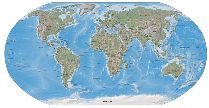
| Lokalizacja | Central Europe, bordering the Baltic Sea and the North Sea, between the Holandia and Polska, south of Dania | Eastern Asia, bordering the East Chiny Sea, Korea Bay, Yellow Sea, and South Chiny Sea, between North Korea and Wietnam |
| Lokalizacja na mapie | Europe | Asia |
| Morskie obszary | territorial sea: 12 nm
exclusive economic zone: 200 nm continental shelf: 200-m depth or to the depth of exploitation |
territorial sea: 12 nm
contiguous zone: 24 nm exclusive economic zone: 200 nm continental shelf: 200 nm or to the edge of the continental margin |
| Flota handlowa | total: 382 ships (1000 GRT or over) 12,085,484 GRT/14,261,476 DWT
by type: bulk carrier 1, cargo 50, chemical tanker 11, container 269, liquefied gas 5, passenger 5, passenger/cargo 26, petroleum tanker 12, roll on/roll off 3 foreign-owned: 7 (Chiny 2, Finlandia 4, Irlandia 1) registered w other countries: 2,716 (Antigua i Barbuda 891, Australia 2, Bahamas 40, Belgia 1, Bermudy 21, Brazylia 7, Bulgaria 1, Birma 5, Kanada 3, Kajmany 17, Cypr 197, Dania 12, Wyspy Owcze 1, Finlandia 2, Francja 1, Georgia 2, Gibraltar 117, Hong Kong 10, Wyspa Man 61, Wlochy 1, Jamajka 1, Liberia 728, Luksemburg 10, Malezja 2, Malta 67, Wyspy Marshalla 214, Maroko 1, Holandia 70, Antyle Holenderskie 48, Norwegia 2, NZ 1, Panama 38, Portugalia 22, Rosja 2, Singapur 18, Hiszpania 9, Sri Lanka 6, St Vincent and The Grenadines 3, Szwecja 4, Turcja 1, UK 71, US 6) (2007) |
total: 1,775 ships (1000 GRT or over) 22,219,786 GRT/33,819,636 DWT
by type: barge carrier 3, bulk carrier 415, cargo 689, carrier 3, chemical tanker 62, combination ore/oil 2, container 157, liquefied gas 35, passenger 8, passenger/cargo 84, petroleum tanker 250, refrigerated cargo 33, roll on/roll off 9, specialized tanker 8, vehicle carrier 17 foreign-owned: 12 (Ekwador 1, Grecja 1, Hong Kong 6, Japonia 2, South Korea 1, Norwegia 1) registered w other countries: 1,366 (Bahamas 9, Bangladesz 1, Belize 107, Bermudy 10, Boliwia 1, Kambodza 166, Cypr 10, Francja 5, Georgia 4, Niemcy 2, Honduras 3, Hong Kong 309, Indie 1, Indonezja 2, Liberia 32, Malezja 1, Malta 13, Wyspy Marshalla 3, Mongolia 3, Norwegia 47, Panama 473, Filipiny 2, Sierra Leone 8, Singapur 19, St Vincent and The Grenadines 106, Tajlandia 1, Turcja 1, Tuvalu 25, unknown 33) (2007) |
| Wojsko | Federal Armed Forces (Bundeswehr): Army (Heer), Navy (Deutsche Marine, includes naval air arm), Air Force (Luftwaffe), Joint Service Support Command (Streitkraeftebasis), Central Medical Service (Zentraler Sanitaetsdienst) (2006) | People's Liberation Army (PLA): Ground Forces, Navy (includes marines and naval aviation), Air Force (includes airborne forces), and Second Artillery Corps (strategic missile force); People's Armed Police (PAP); Reserve and Militia Forces (2006) |
| Wojsko - wydatki (procent PKB) | 1.5% (2005 est.) | 4.3% (2006) |
| Swieto narodowe | Unity Day, 3 pazdziernik (1990) | Anniversary of the Founding of the People's Republic of Chiny, 1 pazdziernik (1949) |
| Narodowosc | noun: German(s)
adjective: German |
noun: Chinese (singular and plural)
adjective: Chinese |
| Naturalne zagrozenia | flooding | frequent typhoons (about five per year along southern and eastern coasts); damaging floods; tsunamis; earthquakes; droughts; land subsidence |
| Surowce naturalne | coal, lignite, natural gas, iron ore, copper, nickel, uranium, potash, salt, construction materials, timber, arable land | coal, iron ore, petroleum, natural gas, mercury, tin, tungsten, antimony, manganese, molybdenum, vanadium, magnetite, aluminum, lead, zinc, uranium, hydropower potential (world's largest) |
| Wspolczynnik migracji | 2.18 migrant(s)/1,000 population (2007 est.) | -0.39 migrant(s)/1,000 population (2007 est.) |
| Ludzie - uwagi | second most populous country w Europe after Rosja | - |
| Rurociagi | condensate 37 km; gas 25,094 km; oil 3,546 km; refined products 3,828 km (2007) | gas 26,344 km; oil 17,240 km; refined products 6,106 km (2007) |
| Partie polityczne i przywodcy | Alliance '90/Greens [Claudia ROTH and Reinhard BUETIKOFER]; Christian Democratic Union or CDU [Angela MERKEL]; Christian Social Union or CSU [Erwin HUBER]; Free Democratic Party or FDP [Guido WESTERWELLE]; Left Party or Die Linke [Lothar BISKY and Oskar LAFONTAINE]; Social Democratic Party or SPD [Kurt BECK] | Chinese Communist Party or CCP [HU Jintao]; eight registered small parties controlled by CCP |
| Przesladowania polityczne ugrupowan oraz liderow | business associations and employers' organizations; religious, trade unions, immigrant, expellee, and veterans groups | no substantial political opposition groups exist, although the government has identified the Falungong spiritual movement and the Chiny Democracy Party as subversive groups |
| Ludnosc | 82,400,996 (lipiec 2007 est.) | 1,321,851,888 (lipiec 2007 est.) |
| Ludnosc zyjaca na skraju ubostwa | 11% (2001 est.) | 8%
note: 21.5 million rural population live below the official "absolute poverty" line (approximately $90 per year); and an additional 35.5 million rural population above that but below the official "low income" line (approximately $125 per year) (2006 est.) |
| Przyrost naturalny | -0.033% (2007 est.) | 0.606% (2007 est.) |
| Stacje radiowe | AM 51, FM 787, shortwave 4 (1998) | AM 369, FM 259, shortwave 45 (1998) |
| Linie kolejowe | total: 48,215 km
standard gauge: 47,962 km 1.435-m gauge (20,278 km electrified) narrow gauge: 229 km 1.000-m gauge (16 km electrified); 24 km 0.750-m gauge (2006) |
total: 75,438 km
standard gauge: 75,438 km 1.435-m gauge (20,151 km electrified) (2005) |
| Religie | Protestant 34%, Roman Catholic 34%, Muslim 3.7%, unaffiliated or other 28.3% | Daoist (Taoist), Buddhist, Christian 3%-4%, Muslim 1%-2%
note: officially atheist (2002 est.) |
| Wspolczynnik plci | at birth: 1.06 male(s)/female
under 15 years: 1.054 male(s)/female 15-64 years: 1.038 male(s)/female 65 years and over: 0.71 male(s)/female total population: 0.966 male(s)/female (2007 est.) |
at birth: 1.11 male(s)/female
under 15 years: 1.134 male(s)/female 15-64 years: 1.057 male(s)/female 65 years and over: 0.914 male(s)/female total population: 1.06 male(s)/female (2007 est.) |
| Prawo wyborcze | 18 years of age; universal | 18 years of age; universal |
| System telefoniczny | general assessment: Niemcy has one of the world's most technologically advanced telecommunications systems; as a result of intensive capital expenditures since reunification, the formerly backward system of the eastern part of the country, dating back to Swiat War II, has been modernized and integrated z that of the western part
domestic: Niemcy is served by an extensive system of automatic telephone exchanges connected by modern networks of fiber-optic cable, coaxial cable, microwave radio relay, and a domestic satellite system; cellular telephone service is widely available, expanding rapidly, and includes roaming service to many foreign countries international: country code - 49; Niemcy's international service is excellent worldwide, consisting of extensive land and undersea cable facilities as well as earth stations w the Inmarsat, Intelsat, Eutelsat, and Intersputnik satellite systems (2001) |
general assessment: domestic and international services are increasingly available dla private use; unevenly distributed domestic system serves principal cities, industrial centers, and many towns; Chiny continues to develop its telecommunications infrastructure, and is partnering z foreign providers to expand its global reach; 3 of Chiny's 6 major telecommunications operators are part of an international consortium which, w grudzien 2006, signed an agreement z Verizon Business to build the first next-generation fiber optic submarine cable system directly linking the US mainland and Chiny
domestic: interprovincial fiber-optic trunk lines and cellular telephone systems have been installed; mobile-cellular subscribership is increasing rapidly; the number of internet users reached 162 million w 2007; a domestic satellite system z 55 earth stations is w place international: country code - 86; a number of submarine cables provide connectivity to Asia, the Middle East, Europe, and the US; satellite earth stations - 5 Intelsat (4 Ocean Spokojny and 1 Ocean Indyjski), 1 Intersputnik (Ocean Indyjski region) and 1 Inmarsat (Pacific and Ocean Indyjski regions) (2007) |
| Telefony - wykorzystywane linie telefoniczne | 54.2 million (2006) | 368 million (2006) |
| Telefony komorkowe | 84.3 million (2006) | 461.1 million (2006) |
| Stacje telewizyjne | 373 (plus 8,042 repeaters) (1995) | 3,240 (of which 209 are operated by Chiny Central Television, 31 are provincial TV stations, and nearly 3,000 are local city stations) (1997) |
| Uksztaltowanie terenu | lowlands w north, uplands w center, Bavarian Alps w south | mostly mountains, high plateaus, deserts w west; plains, deltas, and hills w east |
| Wspolczynnik nardzin przypadajacy na kobiety | 1.4 children born/woman (2007 est.) | 1.75 children born/woman (2007 est.) |
| Wspolczynnik bezrobocia | 9.1%
note: this is the International Labor Organization's estimated rate dla international comparisons; Niemcy's Federal Employment Office estimated a seasonally adjusted rate of 10.8% (2007 est.) |
4% unemployment w urban areas; substantial unemployment and underemployment w rural areas (2007 est.) |
| Drogi wodne | 7,467 km
note: Rhine River carries most goods; Main-Danube Canal links North Sea and Black Sea (2006) |
124,000 km navigable (2006) |